 558 Reviews

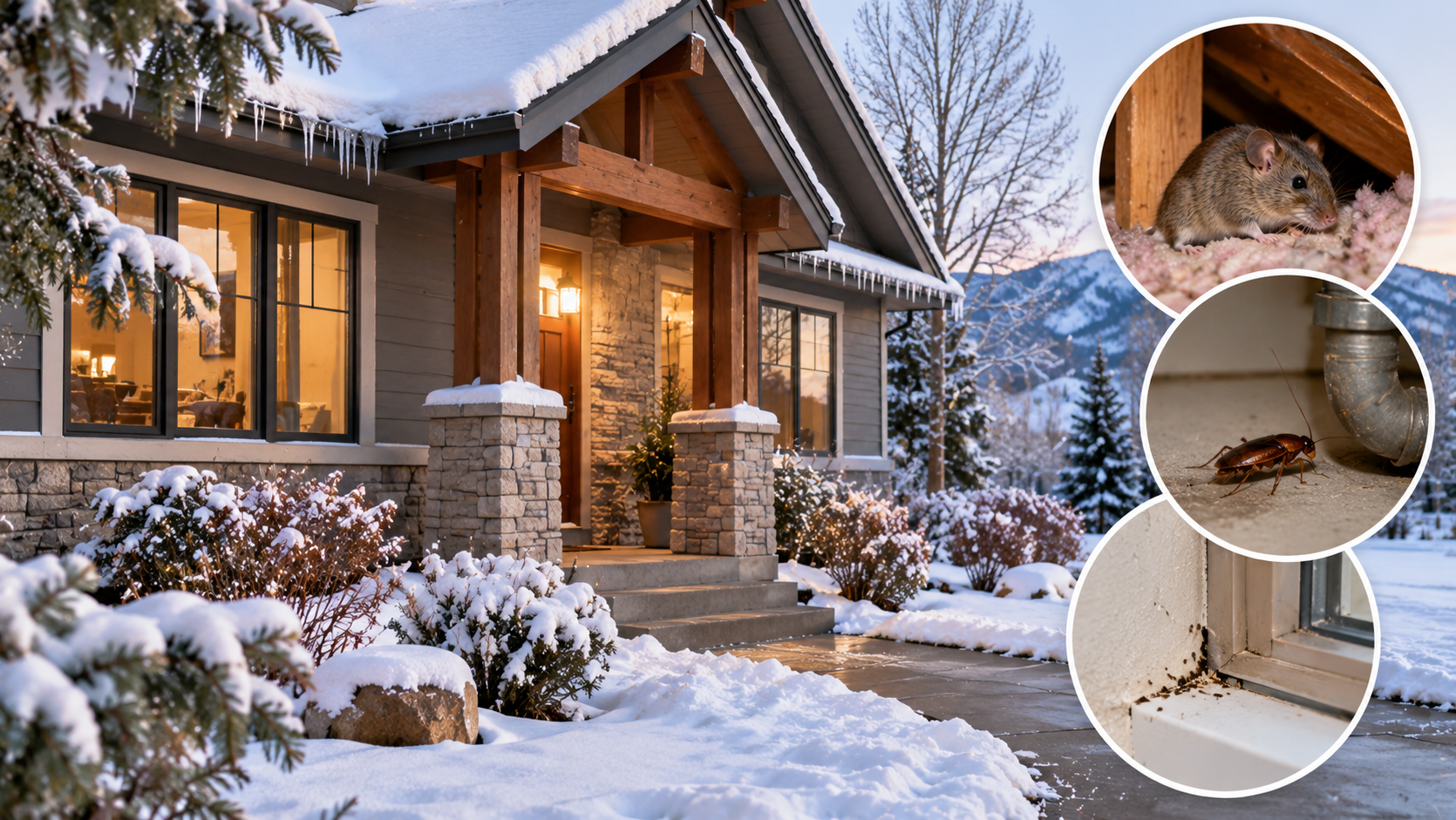
Snow-covered lawns and freezing mornings can give Idaho homeowners the impression that pest season has ended. Outdoor insect activity often decreases during cold weather, but protected environments inside buildings can remain suitable for several pests. Rodents may use attics and garages, while cockroaches can persist around heated plumbing areas.
Winter pest control addresses these changing conditions rather than assuming that every species disappears until spring. Our technicians evaluate the property, confirm which pests are active, and recommend treatments appropriate for the season. This approach helps homeowners understand the difference between temporary outdoor inactivity and problems developing in concealed indoor spaces.

Winter Conditions Change Where Pests Find Shelter
Cold weather influences pest behavior, but the response depends on the species. Mice and rats may seek protected areas with food and nesting materials. Some insects remain active indoors because temperatures are more stable than outside. Others become considerably less noticeable until conditions improve.
Common winter concerns include:
- Rodent sheltering: Attics, garages, wall cavities, and crawl spaces can provide protected nesting locations.
- Cockroach activity: Heated kitchens, bathrooms, and utility areas may support populations near moisture and food.
- Indoor bed bugs: Bed bugs can remain active in occupied, heated rooms regardless of freezing outdoor conditions.
- Concealed entry routes: Damaged vents, door seals, and utility openings may allow pests to enter protected spaces.
- Existing infestations: Pest populations already established indoors may continue even when outdoor sightings decline.
Our article on seasonal pest activity explains how Idaho’s changing weather affects the locations and behavior of different pests.
These patterns do not mean every home has an infestation during winter. A single sighting can have several explanations, and some evidence may come from earlier activity.
The purpose of professional inspection is to identify actual conditions before determining whether treatment is necessary. This avoids treating unrelated concerns as though they involve the same species or source.
Seasonal Inspections Reveal Vulnerabilities Homeowners May Miss
A property can develop new pest-entry opportunities throughout the year. Weatherstripping wears down, utility openings remain exposed, and stored belongings may conceal evidence in garages or other quiet spaces.
Winter inspections provide an opportunity to reassess these conditions, especially when unusual sounds or repeated sightings begin appearing.
Our technicians may examine:
- Door transitions: Worn garage seals and exterior door gaps can create access routes for rodents.
- Roofline features: Damaged vents, soffits, and construction joints may expose attic areas.
- Plumbing locations: Damp cabinets and utility connections can support certain insects and conceal movement.
- Storage areas: Undisturbed boxes and other materials may provide shelter or nesting opportunities.
- Foundation openings: Gaps near utility penetrations and crawl-space vents can connect outdoor routes with interior spaces.
Inspection findings guide the appropriate treatment strategy. Rodent activity may require trapping, exclusion recommendations, and monitoring, while confirmed cockroach infestations may benefit from targeted treatments around established harborages.
A gap does not automatically mean pests are using it. We look for droppings, gnaw marks, insect evidence, and other relevant signs before identifying a location as an active concern.
This evidence-based approach also clarifies when repairs fall outside pest-control work. Damaged plumbing, deteriorated building materials, or structural problems may require an appropriate specialist.
Continuing Pest Management Helps Maintain Winter Protection
A single treatment can resolve some limited pest problems, but a property’s conditions continue changing after service. New activity may develop near an overlooked opening, and existing populations may require follow-up before results can be evaluated reliably.
Ongoing professional management provides continuity across those changes.
A winter protection plan may include:
- Initial documentation: Recording the species identified and affected locations establishes a reference for later inspections.
- Targeted applications: Treatment choices reflect confirmed pest activity and relevant household conditions.
- Exterior review: Technicians assess vulnerable building transitions and conditions near the structure.
- Follow-up observations: Comparing new evidence with earlier findings helps determine whether activity has changed.
- Seasonal planning: Service recommendations can be adjusted as temperatures, moisture, and pest pressure shift.
Our discussion of winter pest services explains why colder weather should not automatically end professional attention to a property’s pest vulnerabilities.
Not every appointment requires the same treatment. A previously affected location may remain stable, while another area develops evidence that deserves investigation.
We also consider how the household uses the property. Homes with pets, children, or frequently occupied storage areas may require additional discussion about treatment placement and appropriate precautions.
Professional pest management cannot guarantee that no pest will ever enter a home. Nevertheless, accurate identification, documented inspections, and appropriate follow-up can reduce uncertainty and support more effective decisions.
For Idaho homeowners, winter preparation is therefore about maintaining awareness of hidden activity while ensuring that treatment remains relevant to actual conditions.
Keep Winter Comfort Inside and Unwanted Pests Outside
If pest activity is continuing through colder weather, contact Alpha Home Pest Control for a professional inspection. Our team can assess vulnerabilities, recommend targeted treatment, and help establish an appropriate winter pest-control plan.